
Strategy
How to Choose a Brand Name: A Founder's Framework
A structured framework for choosing a brand name that's memorable, scalable, and legally protectable — with practical checks for the Indian market.
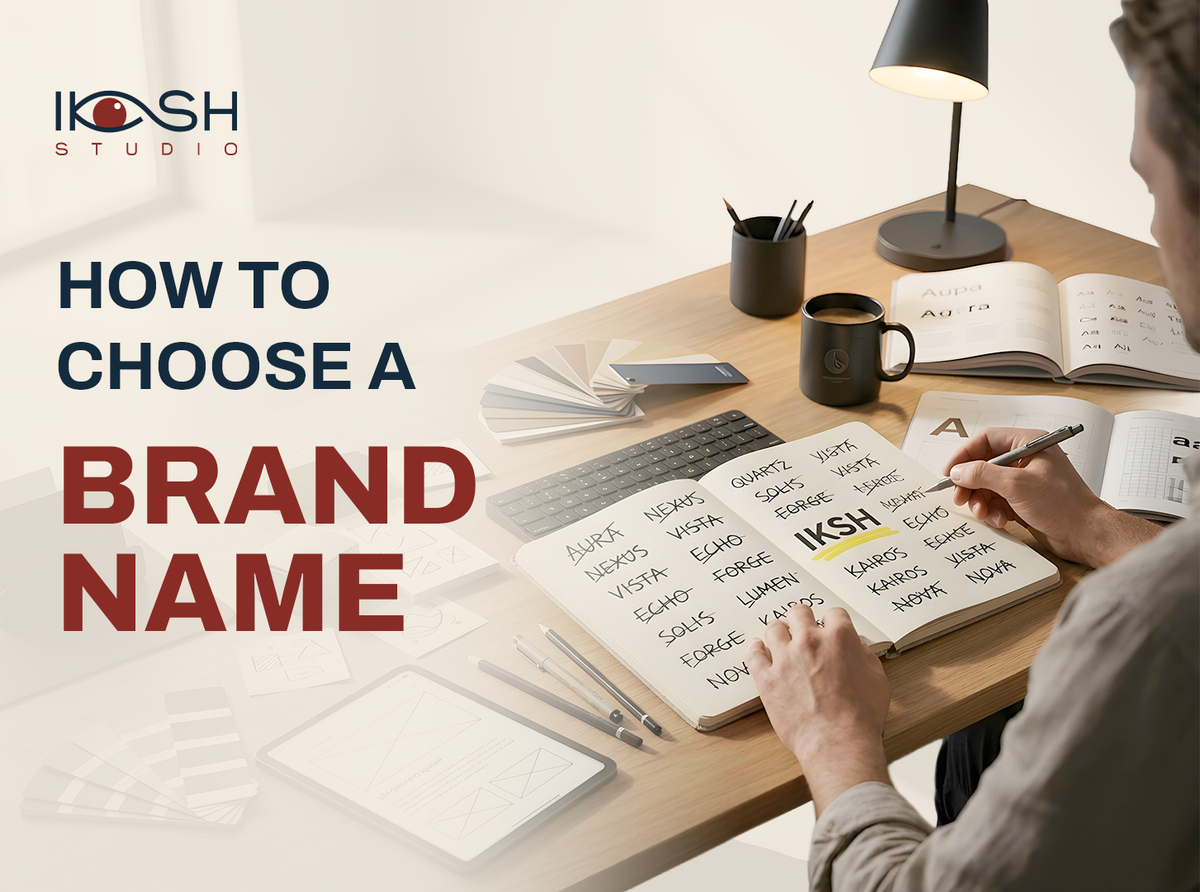
A brand name is often the first thing people notice about your business. It appears in Google searches, sales presentations, invoices, social media, packaging, and conversations long before customers experience your product or service.
Yet many founders spend months perfecting their product and only a few hours deciding what to call it.
Choosing a brand name isn't just a creative task. It's a strategic decision that influences how people remember your business, search for it online, and trust it over time.
At IKSH Studio, we approach naming with the same level of thinking as any other business decision. While every brand is different, the framework remains consistent. Here's how we recommend founders choose a name that's memorable, scalable, and ready for the future.
Start with your brand strategy
The biggest mistake founders make is brainstorming names before defining their brand. A name should reflect what your business stands for, not just what sounds good.
Before creating a shortlist, answer a few simple questions:
- Who are you building for?
- What problem are you solving?
- How do you want customers to describe your brand?
- Are you positioning yourself as premium, innovative, approachable, or affordable?
For example, a luxury skincare brand and a fintech startup can both have excellent names, but they shouldn't sound alike because they solve different problems for different audiences. When your positioning is clear, choosing a name becomes much easier.
Choose the right type of name
Not every successful brand follows the same naming style. Understanding the different approaches helps you make a more informed decision.
Descriptive names
These explain what the business does. Examples include FirstCry, BookMyShow, and MakeMyTrip. They are easy to understand and help customers immediately identify the category. The downside is that descriptive names can be difficult to trademark because similar businesses often think of similar words.
Suggestive names
Suggestive names hint at an idea or benefit rather than explaining the product directly. Brands like Swiggy, Blinkit, and Zepto don't describe their services, but they create a feeling of speed and convenience.
Invented names
Some of the world's most valuable brands use words that didn't exist before they were created. Think of Google, Kodak, or Xerox. These names require more effort in the beginning but become highly distinctive over time.
Founder names
Using a founder's surname or personal identity works well when expertise and trust are central to the business. Brands like Tata, Mahindra, and Ford are classic examples.
There isn't a perfect naming style. The right choice depends on your business goals and long-term vision.
Keep it simple
One of the easiest ways to strengthen a brand name is to make it easier to remember. Ask yourself:
- Can someone pronounce it after hearing it once?
- Can they spell it without asking again?
- Will they remember it tomorrow?
Compare these two names: Quantum Integrated Business Solutions and Stripe. One requires explanation. The other is remembered almost instantly.
Simple names reduce friction. Every extra word, unusual spelling, or complicated pronunciation makes it harder for customers to recommend your business.
Think beyond today
Many founders choose names based on the first product they plan to sell. That works until the business grows.
Imagine naming your company Delhi Cake Shop. It makes sense if you sell cakes in Delhi. But what happens when you expand across India or introduce chocolates, desserts, and cafés? The name starts limiting the business.
Now consider Apple. The company began with computers but the name gave it room to grow into phones, watches, music, services, and much more.
A good brand name should support your future, not just your launch.
Check digital availability early
It's common for founders to fall in love with a name before checking whether they can actually use it. Before finalizing anything, check:
- Website domain availability
- Social media usernames
- Search engine results
- Existing businesses with similar names
Consistency matters. If customers can find the same name across your website, Instagram, LinkedIn, and YouTube, your brand instantly feels more credible.
Don't skip the trademark check
A strong name isn't just memorable. It should also be legally protectable. We've seen businesses invest heavily in websites, packaging, and marketing campaigns only to discover that another company already owns a similar trademark.
Changing your name after launch is expensive. A trademark search should be part of your naming process, not something you think about later. For Indian businesses, it's worth checking trademark availability before making any major branding investment.
Consider the cultural context
India is a diverse market. A name that sounds great in English may have a completely different meaning in another language.
If you're targeting multiple regions or international markets, test your shortlisted names with different audiences. Ask people from different age groups and backgrounds to pronounce the name and tell you what comes to mind. Sometimes a five-minute conversation reveals issues that months of brainstorming never would.
The IKSH Studio founder's framework
When we help founders develop a brand name, we evaluate every option against six simple questions.
Is it memorable?
A great name should stay with people after a single conversation.
Is it easy to pronounce?
If customers hesitate to say it, they'll hesitate to recommend it.
Is it distinctive?
Your name should help your business stand apart, not blend into a crowded market.
Can it grow with the business?
Avoid names that limit future expansion into new products, services, or markets.
Is it digitally available?
Check domains, social handles, and search visibility before making a decision.
Can you protect it?
Trademark availability should always be part of the final evaluation.
If a name satisfies all six, you're usually moving in the right direction.
Common mistakes founders make
After working with businesses across different industries, we've noticed a few patterns. Avoid these common mistakes:
- Choosing a name because it sounds trendy.
- Copying competitors.
- Using difficult spellings to get an available domain.
- Making the name too long.
- Naming the business around one product.
- Skipping trademark research.
- Asking too many people for opinions instead of following a clear framework.
Remember, your customers don't know the story behind your brainstorming sessions. They only experience the final name.
Why we chose the name IKSH
When we named our own studio, we followed the same framework we recommend to every client. We weren't looking for a name that simply described a design agency. We wanted one that reflected our philosophy.
IKSH is inspired by the Sanskrit word "Ikshana" (ईक्षण), meaning to observe, perceive, and see with intention. We believe every successful brand begins with understanding. Before designing an identity, we take the time to understand the business, its audience, and what makes it different.
That thinking is reflected in our tagline, "seen clearly, built to last."
For us, IKSH isn't just a name. It's a reminder that great branding starts with clarity, and clarity comes from observation.
Final thoughts
There isn't a perfect brand name. There is only the right name for your business.
A strong name is memorable without trying too hard. It supports your positioning, works across digital platforms, and leaves room for your business to grow. Most importantly, it gives every future branding effort a stronger foundation.
At IKSH Studio, we believe naming is more than finding a word that sounds good. It's about creating an identity that people will remember, trust, and talk about for years to come. Take your time, test your ideas, and build your name with the future in mind.
Great brands aren't remembered by accident. They're built with intention.
Our perspective
We treat branding as an investment, not a line item. Every deliverable is designed to compound trust, recognition, and pricing power over the next decade — not just look good on launch day.
— Saurabh Jain
Founder & Creative Director
Next step
Need help naming your brand?
Naming sprints that balance meaning, memorability and availability. Tell us where you are today and we'll reply within 24 business hours.
No spam. No pressure. Just a strategic conversation.
Frequently asked questions.
Reader engagement
Comments(0)
Publish instantly
- Loading comments…